
Warren Previous Residents by Era
Each source answers an address question for a different slice of time. The strongest starting point is the current parcel because it provides the legal bridge to recorded documents. Earlier research then shifts to the County Archives, historical directory holdings, newspaper microfilm, and federal census material. A blank year is not proof that nobody lived there. It may simply be a gap in a directory run, an unindexed source, or an address that must be reconciled through its legal description.
| Source | Years It Covers | Where Held | What It Shows |
|---|---|---|---|
| Recorder PAX online notice | Online from 1980 | Trumbull County Recorder PAX | Modern recorded-instrument path and document references |
| Recorder FAQ coverage statement | Back to 1795, except military discharges | Recorder office and PAX route | A competing deep-coverage claim that must be verified for a specific item |
| County Archives tax and land holdings | Tax Duplicate 1811; 1820-1946 series; selected early deeds | Trumbull County Archives | Early owner and tax-history clues, often before modern address use |
| Warren city-directory holdings | 1889-90 through 1998, with documented gaps | OGS, WTCPL, and stated repositories | Year-specific address or household leads |
| WTCPL newspapers and federal census | Newspaper microfilm 1812-present; census under the 72-year rule | WTCPL and NARA | Event context and a household at one census date |
For a recent transfer, begin with the Recorder and recheck the parcel. For a period before an online document can be confirmed, ask the Recorder or Archives about the named series. For a household question, select a documented directory year and then pair it with the nearest census release rather than claiming uninterrupted residence.
Start With Current Warren Address Records
The Trumbull County Auditor property gateway accepts parcel, owner, or address input. Search the present address, select the correct parcel, and record the situs address, parcel number, and legal description. Situs means the physical property address. A mailing address on a tax record can be only correspondence, so it should not be treated as proof that someone was living at the property.
That parcel record is the start of a backward trail, not its conclusion. The County GIS and City map can help resolve whether a current number or street lies in the intended place. If an older document uses different wording, compare the legal description before deciding that it belongs to another address. The GIS office maintains 911 address updates after local zoning, fire-department, or trustee assignment, which is one reason old and new records may not match neatly.
Note: Preserve the exact parcel and legal description before moving from a Warren address to a name-based deed search.
Warren Records Need a Legal Trail
The Trumbull County Recorder PAX service is a recorded-document index. Its Name Search, Advanced/Legal Search, and Instrument Search modes can be used with a known party and the property details from the Auditor record. The legal controls include parcel, subdivision or condo, lot, block, unit, acreage, township, range, and description. PAX is not a tract or geographic index, so a street name alone is not a documented way to reconstruct previous residents.
A PAX result can supply parties, instrument type and ID, Book/Page, Short Legal, recorded date, consideration, and related references. Those fields establish a document lead, not a finished title decision. Compare the actual document image, legal description, parcel, and any cross-reference. The Recorder says staff do not perform real-estate title searches, though they can provide general information when a volume, page, or instrument number is known. Counter access remains the practical alternative for deeper help.
The Trumbull County Recorder source is the official entry point for deed records, office contact information, and its public-access links.
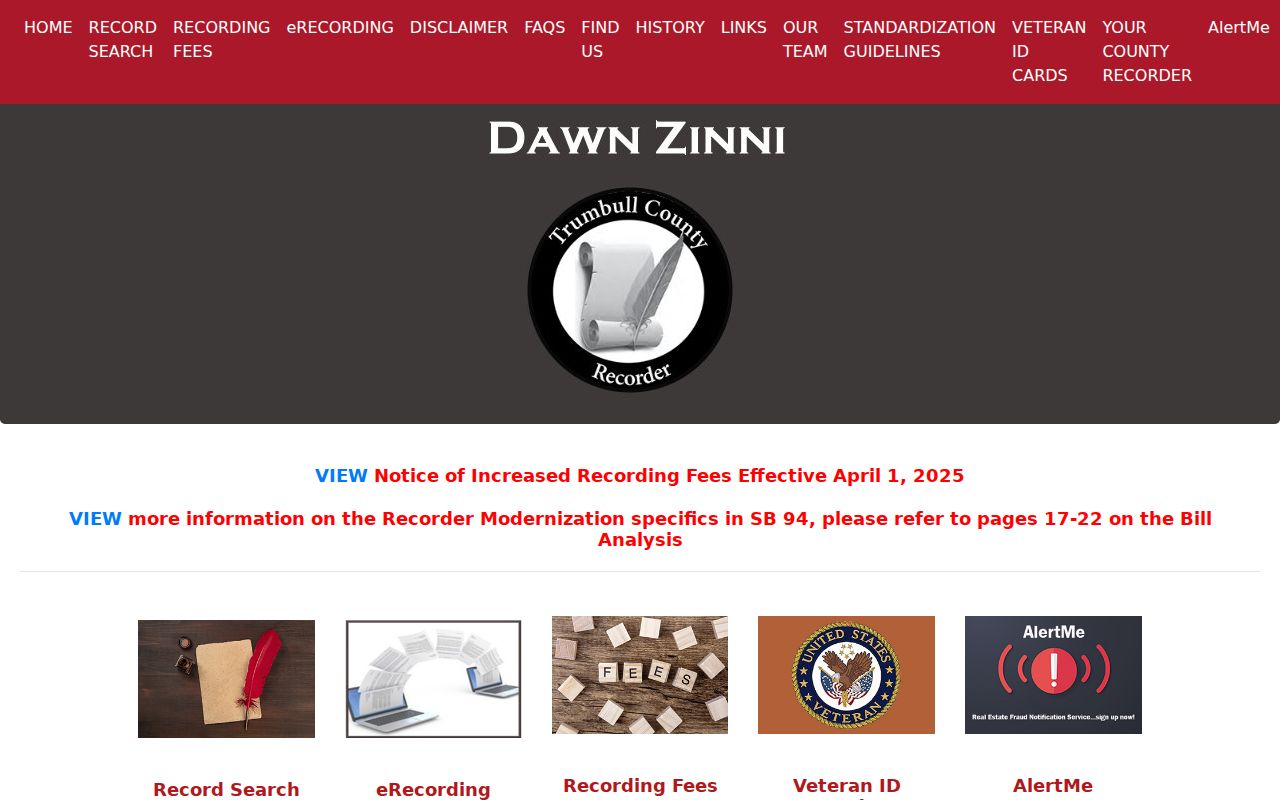
Recorder material carries the legal property trail, while the household layer needs dated historical sources.
Trace Warren Previous Residents Through Deeds
Previous residents research should distinguish ownership from occupancy. A deed chain follows recorded transfers of the property, then historical directories and census records may add a household lead. Start with the most recent confirmed transfer and work backward one document at a time. Keep a simple list of each party, date, instrument reference, and legal description so that an earlier search can be checked against the same land rather than only a similar name.
- Use the Auditor result to preserve the current parcel, situs address, and legal description.
- Find the current transfer in PAX with the party and legal or instrument details. Note its other party, recorded date, document ID, Book/Page, consideration, and Short Legal.
- Treat the seller or other transferring party as a prior-owner lead. Search that person again with the same legal-description or Book/Page context.
- Repeat the comparison for each earlier acquisition. Search spelling variants, spouses, estates, trusts, and entities separately when the document itself supplies those leads.
- When the date falls outside clearly available online coverage, ask the Recorder counter and County Archives for the appropriate deed, indenture, or tax series. Do not claim an address-only chain.
- Grantor / grantee
- The grantor transfers an interest in a document; the grantee receives it. Portal party labels should be read as the portal presents them.
- Chain of title
- A sequence of recorded transfers tied to the same property. It is not a list of every person who lived there.
- Legal description
- The recorded land description that helps hold the trail together when street wording changes or repeats.
- Criss-cross directory
- A reverse directory arranged by address. Confirm that a particular Warren volume includes one before relying on it.
Warren Previous Residents: 1980 and 1795
The Recorder's live PAX notice says documents are available online from 1980 and notes verification through August 27, 2026. The Recorder FAQ separately says data and images, other than military discharges, reach back to 1795. These statements should not be silently combined into a promise that every old document can be found online. For an early transfer, ask the Recorder which index, image, or archive material is available for the specific document.
The conflict is useful because it changes the next step. A no-result in the modern portal does not eliminate an older deed trail. It points the researcher to Recorder counter access and the County Archives Recorder inventory, which identifies Western Reserve Deeds and Indenture Record volume 1 for 1824-1869 among its early holdings.
Note: Record the portal's stated coverage and the custodian's answer for the specific date before treating a missing result as final.
Warren Tax Records Precede Directory Years
The County Archives Auditor inventory identifies tax duplicates beginning in 1811 and series spanning 1820-1946, along with auditor deeds, appraisements, and assessment material. These are legal and tax-history records, not an address-indexed resident directory. They can be a valuable bridge when a property trail extends before verified Warren directory years or before the form of a current street address existed.
Trumbull County's Western Reserve history helps explain why early descriptions may look unlike a modern Warren address. Preserve the volume or series name and ask the Archives about access and copies. The Archives also holds map inventories that bridge township-era legal descriptions and later City streets. The 1895 courthouse fire is a reason to identify a named surviving series, not a reason to assume that all records were lost.
Pair Warren Directories With Census Dates
The household layer begins with a specific year, not a general claim that someone lived at an address for decades. Documented Warren city-directory holdings include early volumes for 1889-90, 1891-92, and 1893-94; selected years from 1902 through 1914; later groups in 1932-33, 1937, 1938-39, 1947, and 1949; and an extensive 1951-1998 run. The holdings have gaps, so inspect the actual repository volume before relying on it. The Warren City Directory route lists the collection access channels rather than turning them into a broad street directory.
- Choose a confirmed directory year closest to the address question and record spelling, street wording, and any stated address evidence exactly as printed.
- Check an adjacent available volume before assuming that an omission proves a move. A gap, spelling difference, or changed street wording may explain it.
- Pair the dated directory result with the nearest released federal census through National Archives census research. The census provides a household at its census date, not continuous occupancy.
- Use newspaper microfilm, obituary citations, and Recorder or Archives records to test the time and property connection. Keep every source tied to its own date.
WTCPL digitized local-history resources include selected card files and the 1918 atlas material. Their indexes are incomplete or volunteer-transcribed where stated, so originals remain the check for a historical conclusion.
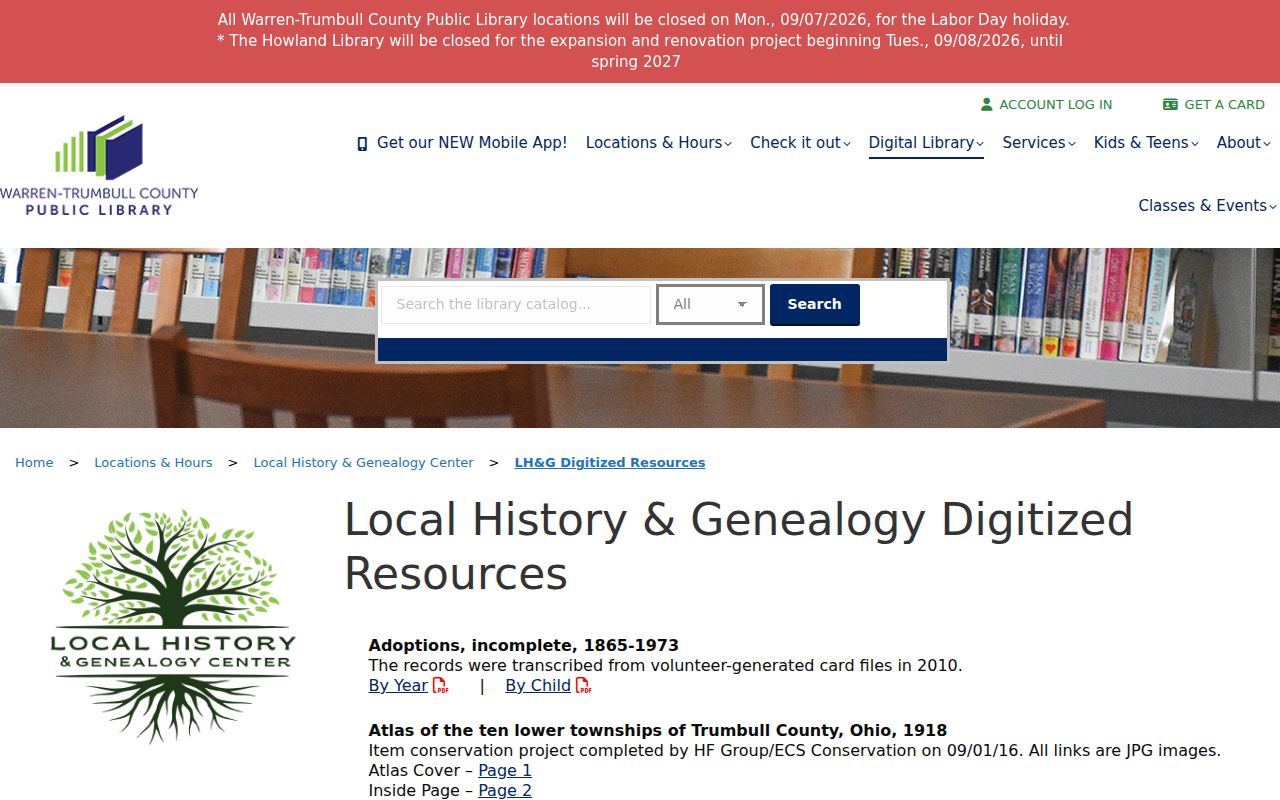
Digitized local-history material can enrich a dated address question, but it does not replace the original custodian record.
Warren Previous Residents Need Map Context
The 1918 atlas available through WTCPL includes a Warren street and industrial map and City plates, while the County Archives map inventory identifies 1917 and 1918 Warren directional plates. Use them with an older directory year to orient a street or neighborhood, then return to the legal description and property record. Maps can establish period geography; they do not establish that a particular person occupied a building.
No official online comprehensive Warren street-renumbering schedule or exact crosswalk was located in the research. If a historical address conflicts with a current result, compare that year's directory, the dated map, the current City map, and a targeted City request. Do not build a house history on an invented conversion.
Warren Previous Residents and Probate Endpoints
When a dated address question reaches an estate or death, probate and obituary sources can narrow the next record to inspect. The Trumbull County Probate archive links general estate-book indexes and probate docket books, including documented runs from 1837 through 1867. An estate is a file-based lead, not proof of a family relationship or a person's address after the event.
WTCPL's online Warren Tribune Chronicle obituary citation index reaches 1961-2025, with print coverage from 1900 to the present and scattered earlier coverage. Its newspaper microfilm reaches 1812 to the present. A citation can supply a date or name variant, then the underlying newspaper or probate record should be checked. These sources help conclude a historical trail without claiming a current location.
The Probate archive source provides the documented estate-index route for Warren historical research.
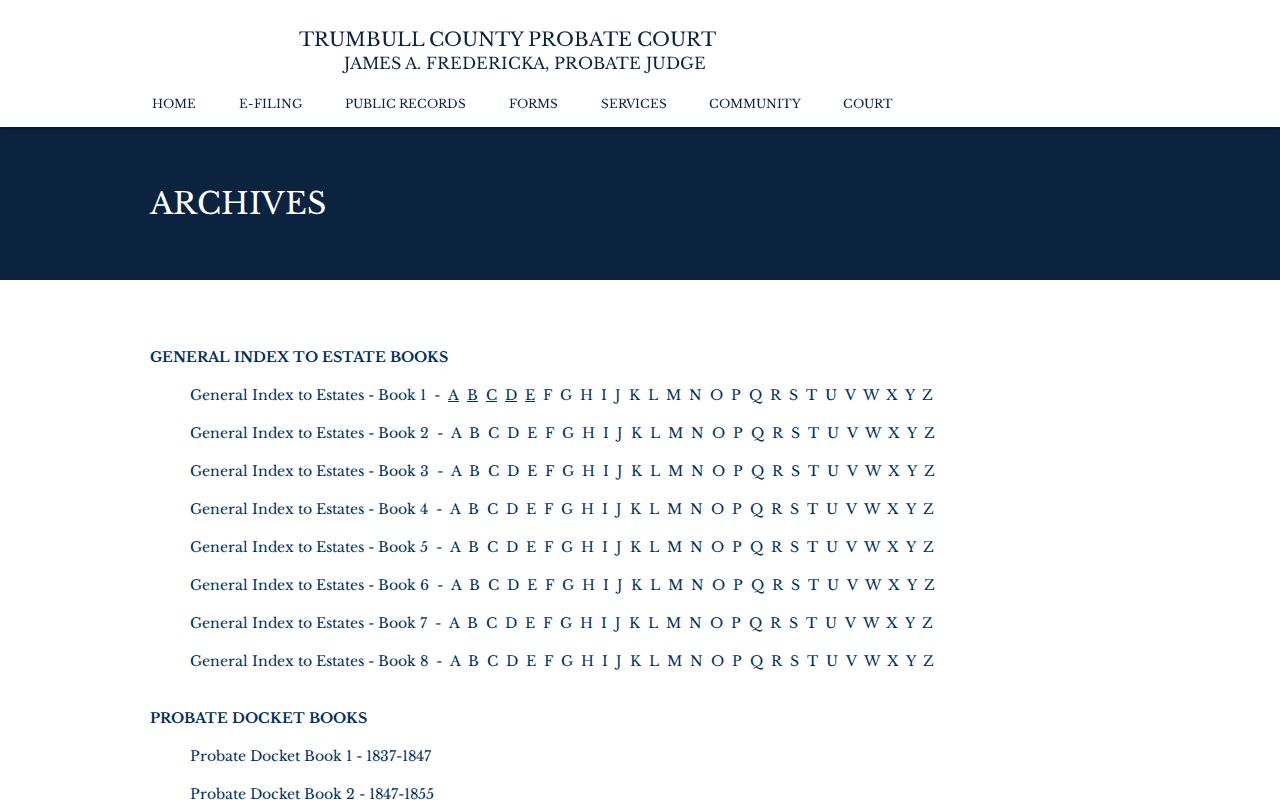
The probate image marks a records endpoint for an identified estate question, not a shortcut around the documented file.
Lawful Warren Previous Residents Research
Previous residents records are best used for family history, estate or heir questions, a property's documented history, civic research, or personal curiosity. Use at least two independent identifiers, such as a name plus a parcel or legal description, a document reference, or a date. An old directory or obituary citation alone cannot establish a current address, and a no-hit does not establish that a person was never connected to a property.
Ohio's Public Records Act permits access to many government records, subject to exemptions and redaction. Safe at Home participants may use substitute addresses, and protected voter, DMV, court, and personal data remain outside an ordinary address trail. Ask the named custodian for the correct inspection or request route when a record is restricted or unclear.
Lawful use. Use Warren house-history records for lawful personal research. Do not use past-address information to stalk, harass, threaten, or track a living person.